 Skip to content

There is a distinct magic to living in Bend, Oregon. Nestled along the eastern slopes of the Cascade Range, the region boasts over 300 days of sunshine a year, snow-capped mountain vistas, and crisp high-desert air. However, the very geographical features that make Central Oregon an outdoor enthusiast’s paradise also create one of the most demanding physical environments in North America for residential building structures. While homeowners marvel at clear blue skies following a winter snowfall or enjoy warm autumn afternoons, their roofs are quietly enduring a relentless, invisible struggle against the laws of physics.
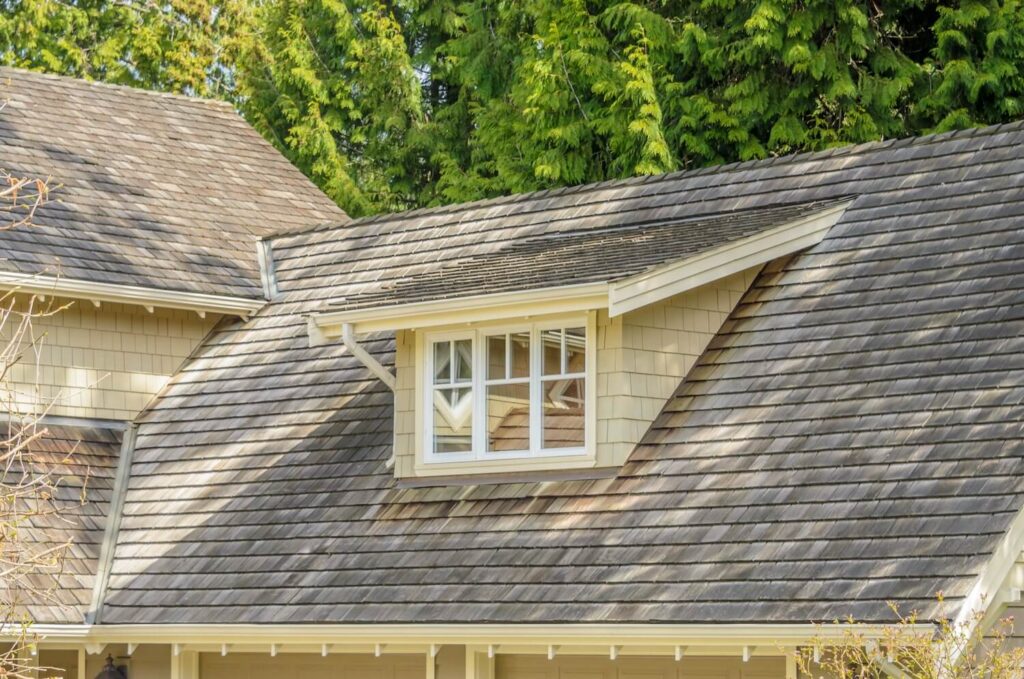
In the high desert, weather changes are not merely seasonal; they happen hour by hour. A single 24-hour cycle in Bend can see temperatures swing by 40 to 50 degrees Fahrenheit. On a sunny afternoon, a roof surface can bake under intense high-altitude ultraviolet radiation, only to plunge far below freezing before midnight. While a newly installed, modern roofing system is engineered with flexible polymers to handle these shifts, an older roof eventually loses its resilience. Over time, these daily temperature fluctuations, a process known in structural engineering as thermal cycling, inflict cumulative material fatigue that causes aging roofs to fail long before their theoretical lifespan is reached.
The High-Desert Climate Equation: Radiation, Altitude, and Diurnal Swings
To understand why older roofs struggle in Bend, OR, one must first look at the unique atmospheric mechanics of Central Oregon. Situated at an elevation of nearly 3,600 feet, Bend experiences thinner atmospheric cover than coastal or valley communities. Thinner air allows a higher concentration of ultraviolet (UV) solar radiation to strike building surfaces directly.
During the spring, summer, and autumn months, dark asphalt shingles or cement tiles absorb this intense solar energy. Even when the ambient air temperature sits at a pleasant 75°F, direct sunlight can drive surface roof temperatures up to 150°F or higher. However, as soon as the sun drops behind the Cascades, the dry high-desert air allows rapid radiative cooling. Heat radiates off the roof deck into the night sky, causing surface temperatures to plunge rapidly, often dropping to 30°F or lower by early morning.
This rapid, dramatic swing in temperature within a single day is known as a diurnal temperature variation. While coastal regions like Portland or Eugene experience mild, damp temperature bands where day and night temperatures differ by only 10 to 15 degrees, Bend subjects rooftops to continuous thermal rollercoasters day in and day out, year after year.
The Science of Thermal Cycling: Material Fatigue in Aging Shingles
Every physical material expands when heated and contracts when cooled. When a roof is brand new, its components are manufactured to accommodate this natural movement without losing structural integrity. Standard asphalt shingles, for example, are constructed with a central fiberglass mat coated in petroleum-rich asphalt and covered with protective mineral granules. Fresh asphalt contains volatile oils that keep the shingle supple, pliable, and rubbery, allowing it to stretch slightly during hot afternoons and contract smoothly during cold nights.
However, time and UV exposure alter this chemical composition. Over years of high-altitude sun exposure, the essential oils within the asphalt gradually evaporate through photo-oxidation. As these oils dissipate, the shingle loses its natural elasticity and becomes increasingly rigid, dry, and brittle.
When an aged, brittle shingle is subjected to Bend’s extreme daily temperature swings, it can no longer flex gracefully. Instead, the repeated cycle of expansion and contraction creates immense internal tension within the hardened asphalt core. This ongoing stress leads to a series of progressive, destructive failures:
1. Micro-Fissuring and Surface Web Cracking
As the brittle shingle expands and contracts, microscopic fractures begin to form across its surface. Initially invisible to the naked eye, these micro-fissures gradually widen into a web-like pattern of surface cracks, breaking the watertight outer seal.
2. Shingle Cupping and Curling
Because the top surface of a shingle receives direct sunlight while the underside remains shaded against the roof deck, the top layer expands and contracts at a faster rate than the bottom. In older, dried-out shingles, this differential movement causes the edges to curl upward or the centers to buckle outward, a phenomenon known as cupping or clawing. Warped shingles no longer lay flat against the roof deck, leaving the building vulnerable to wind uplift.
3. Granule Shedding and Accelerated UV Exposure
The tiny mineral granules on the outer surface of a shingle serve as a sacrificial shield, reflecting UV rays and protecting the raw asphalt substrate beneath. As thermal cycling forces the shingle to expand and contract, the bond between the hardened asphalt and the granules breaks down. The granules loosen and wash into gutters, exposing the bare asphalt beneath to even faster solar degradation.
The Hidden Chain Reaction: Vulnerabilities Beyond the Shingle
A roof is not a uniform block of material; it is an assembly of different components, asphalt, wood, steel, aluminum, rubber, and synthetic polymers, each expanding and contracting at completely different rates. This variation in expansion rates is where the most severe structural damage occurs in older roofs.
Metal Flashing and Sealant Failure
Metal flashings installed around chimneys, skylights, dormers, and vent pipes expand and contract much more dramatically than the surrounding wooden roof deck or asphalt shingles. To keep these transition joints watertight, installers apply flexible elastomeric caulking and sealants.
Over years of thermal cycling, these sealants are stretched and compressed thousands of times while being baked by the sun. Eventually, the caulking hardens, dries out, and loses its adhesive bond, cracking open or pulling away from the metal. Once these sealant lines fail, rainwater and melting snow gain a direct, unobstructed doorway into the home’s framing and ceiling drywall.
Nail Back-Outs and Seal Strip Breakdown
Underneath every course of shingles are steel nails driven into wooden decking. As the wood deck expands and contracts with shifting ambient humidity and temperature, and as the overlying shingles pull against the nail heads during daily thermal shifts, a subtle mechanical lever effect occurs. Fasteners can slowly loosen and “back out,” pushing upward against the shingle tab above them. This creates a raised bump on the roof surface and eventually pierces the shingle layer, creating a pinhole leak.
Simultaneously, the thermal seal strip, a factory-applied bead of heat-activated adhesive that bonds overlapping shingle courses together, degrades under repeated thermal stress. Once these seal strips lose their stickiness, strong winter wind gusts can easily catch the edges of lifted shingles and snap them off completely.
The Winter Threat Multiplier: Freeze-Thaw Cycles and Ice Dams
In Bend, thermal cycling reaches its most dangerous phase during the late fall, winter, and early spring, when daily temperatures cross the freezing mark of 32°F multiple times a week. This freeze-thaw cycle turns minor thermal wear into severe structural damage.
When snow collects on an older roof, heat escaping from an uninsulated or poorly ventilated attic melts the bottom layer of snowpack. This liquid water trickles down the slope beneath the snow until it reaches the cold, unheated eave overhang. If the nighttime temperature drops rapidly into the teens, as it routinely does in the high desert, this water freezes at the roof edge, forming a solid ridge of ice known as an ice dam.
As melting continues the following afternoon, water accumulates behind this ice ridge, creating a standing pool of liquid. On an older roof where shingles are already cupped, cracked, or thermally lifted, this standing water cannot drain off the roof. Instead, it is forced backward, wicking under the shingle laps. When temperatures drop again that night, the trapped water freezes inside the roof assembly. Because water expands by roughly 9% as it freezes, the expanding ice acts like a hydraulic wedge, prying shingles apart, splitting underlayment, and tearing open flashings.
The Role of Attic Ventilation in Regulating Thermal Stress
Many homeowners assume that thermal damage is purely an exterior problem caused by the sun and sky. In reality, the environment inside your attic plays an equally critical role in how well your roof survives temperature swings.
Sunlight hitting a roof transfers immense heat into the enclosed attic space below. Without adequate airflow, attic temperatures during a high-desert summer afternoon can easily climb past 150°F. This trapped thermal energy turns the attic into a giant oven, baking the underside of the wooden roof deck and shingle substrate. This double-sided heating, 150°F from the sun above and 150°F from the attic below, drastically accelerates the evaporation of essential oils from asphalt materials.
In the winter, poor ventilation traps warm, humid household air inside the attic. When this moist air hits the freezing underside of the roof deck, it condenses into liquid water or frost. This internal moisture rots structural rafters, rusts deck fasteners, and ruins insulation efficiency.
A properly engineered roofing system incorporates balanced ventilation to moderate these thermal swings. Cool outdoor air enters through soffit vents at the lower eaves, travels upward along rafter baffles, and exhausts warm, moist air through continuous ridge vents or static box vents at the peak. By maintaining a continuous airflow draft, balanced ventilation stabilizes the roof deck temperature, dampening the severity of daily thermal shifts and extending the service life of the entire structure.
Modern Solutions for High-Desert Roofing Resilience
If your home’s roof is over 15 to 20 years old and has weathered years of Central Oregon thermal cycling, continuing to rely on localized patchwork is often a losing battle. Eventually, the materials across the entire surface reach a point of systemic brittleness where fixing one leak simply shifts the physical strain to the next weakened joint.
Modern roofing engineering has made massive strides in developing materials specifically designed to withstand extreme thermal environments. When replacing an aging roof in Bend, homeowners can choose from advanced solutions engineered for maximum durability:
- Polymer-Modified Architectural Shingles: Modern dimensional shingles incorporate synthetic polymers and SBS-modified asphalt, providing dramatically higher flexibility, impact resistance against hail, and resistance to thermal cracking.
- High-Temperature Ice and Water Shields: Heavy-duty, self-adhering rubberized asphalt membranes installed along eaves, valleys, and penetrations seal tightly around fasteners and remain flexible even in sub-zero temperatures.
- Synthetic Underlayment: Replacing old, tear-prone felt paper with woven polypropylene synthetic underlayment creates a secondary waterproof barrier that will not rot, absorb moisture, or crack under thermal stress.
- Standing Seam Metal Systems: Constructed from heavy-gauge steel with concealed, interlocking fasteners, standing seam metal roofs allow panels to slide smoothly along mounting clips during expansion and contraction, offering a 50-plus year lifespan with virtually zero thermal maintenance.
Navigating these material options and ensuring proper installation requires partnering with a certified local specialist. A professional evaluation from Deschutes Roofing begins with a complete, top-to-bottom assessment of your entire roofing envelope, examining the structural wood deck, flashing seals, gutter drainage, attic insulation, and ventilation airflow to identify hidden thermal damage.
As a family- and veteran-owned contractor with central operations in Bend, Deschutes Roofing holds Master Elite and Preferred certifications from leading manufacturers like GAF, Owens Corning, and Malarkey. These factory credentials ensure that every component is installed to strict high-desert engineering standards, allowing them to back their installations with non-prorated material warranties lasting up to 50 years, paired with a robust 25-year workmanship warranty.
To minimize construction disruption, Deschutes Roofing can complete most standard residential roof replacements in just a single day, protecting your property with their exclusive “New Roof, No Mess®” guarantee using specialized mobile debris management systems. To ensure top-tier protection fits comfortably into your household budget, they offer 100% financing options up to $100,000 with quick online approvals, competitive price matching, and an exclusive $500 discount for veterans, first responders, educators, and seniors.
Frequently Asked Questions (FAQ)
What is thermal cycling, and why is it so damaging to Bend roofs?
Thermal cycling is the repeated expansion and contraction of building materials caused by dramatic daily temperature swings. In Bend’s high-desert climate, rooftops experience surface temperature shifts of 50 to 100 degrees Fahrenheit in a single 24-hour period. Over time, this constant movement causes aging, brittle roofing materials to crack, warp, lose protective granules, and fail.
How can I tell if my asphalt shingles are suffering from thermal fatigue?
Key visual indicators include shingles that are cupping or curling at the edges, surface web cracking, bald spots where mineral granules have washed away into gutters, lifted shingle tabs, and dried-out, cracked caulking around chimney and vent flashings.
Why do older asphalt shingles lose their ability to flex with temperature changes?
Asphalt shingles rely on natural petroleum oils to maintain their suppleness. Over years of exposure to high-altitude UV radiation and heat, these oils evaporate through photo-oxidation. Once the oils are gone, the asphalt hardens and becomes brittle, making it unable to expand and contract without cracking.
How do temperature swings cause ice dams in the winter?
During sunny winter days, heat from the sun and uninsulated attics melts snow on the upper roof deck. As this liquid water flows down toward the cold, unheated eave overhangs, rapid evening temperature drops freeze the water into a solid ice ridge. Subsequent snowmelt gets trapped behind this ice barrier and is forced backward underneath thermally lifted shingles.
Can proper attic ventilation help slow down thermal damage on my roof?
Yes. Balanced attic ventilation allows continuous airflow from soffit intake vents to ridge exhaust vents. This airflow flushes out extreme summer heat, preventing temperatures from climbing past 150°F and baking shingles from below, and removes winter moisture that causes attic frost and ice dams.
Are metal roofs better at handling high-desert temperature swings than asphalt shingles?
Standing seam metal roofs excel in high-desert climates because they feature concealed clip systems that allow metal panels to expand and contract smoothly without placing stress on fasteners or seams. Metal panels also reflect solar UV heat, shed heavy snowpack effortlessly, and last 40 to 70 years with minimal maintenance.
How often should I have my roof inspected in Central Oregon?
It is recommended to have your roof professionally evaluated at least once every two to three years, as well as immediately following severe windstorms, hail events, or heavy winter snowfalls, to catch minor flashing or sealant failures before they cause interior water damage.
Conclusion: Protecting Your Sanctuary Against the Elements
Bend’s high-desert environment offers an extraordinary quality of life, but its climate demands respect when it comes to property maintenance. The daily dance of high-altitude sun, rapid nighttime cooling, and severe winter freeze-thaw cycles subjects your residential roof to continuous physical stress. While a young roof can flex and absorb these shifts, an older roof eventually surrenders to thermal fatigue.
Ignoring the subtle warning signs of thermal wear, cupped shingles, granule loss, and cracked flashings, invites hidden wood rot, ruined insulation, and costly emergency leaks into your sanctuary. By taking a proactive, evidence-based approach to maintenance and upgrading to modern, climate-engineered roofing systems, you safeguard your property’s structural integrity and equity.
When you are ready to evaluate the health of your roof, trust the local, factory-certified experts at Deschutes Roofing to deliver honest guidance, meticulous craftsmanship, and long-term peace of mind. Contact Deschutes Roofing today to schedule your comprehensive on-site evaluation, explore your financing options, and secure a dry, beautiful shield for decades to come.