 Skip to content

Take a drive down any tree-lined street in Springfield, Oregon, during a calm autumn afternoon. The neighborhood homes present a picture of Pacific Northwest charm, historic bungalows, mid-century ranches, and modern multi-level family residences nestled against the lush greenery of the Willamette Valley. From the sidewalk or driveway, the roofs above these homes seem completely secure. The asphalt shingles appear straight, the gutters look clear, and there are no gaping holes or missing sections to suggest trouble.
Yet, for many Springfield homeowners, that clean exterior profile hides a dangerous structural illusion.
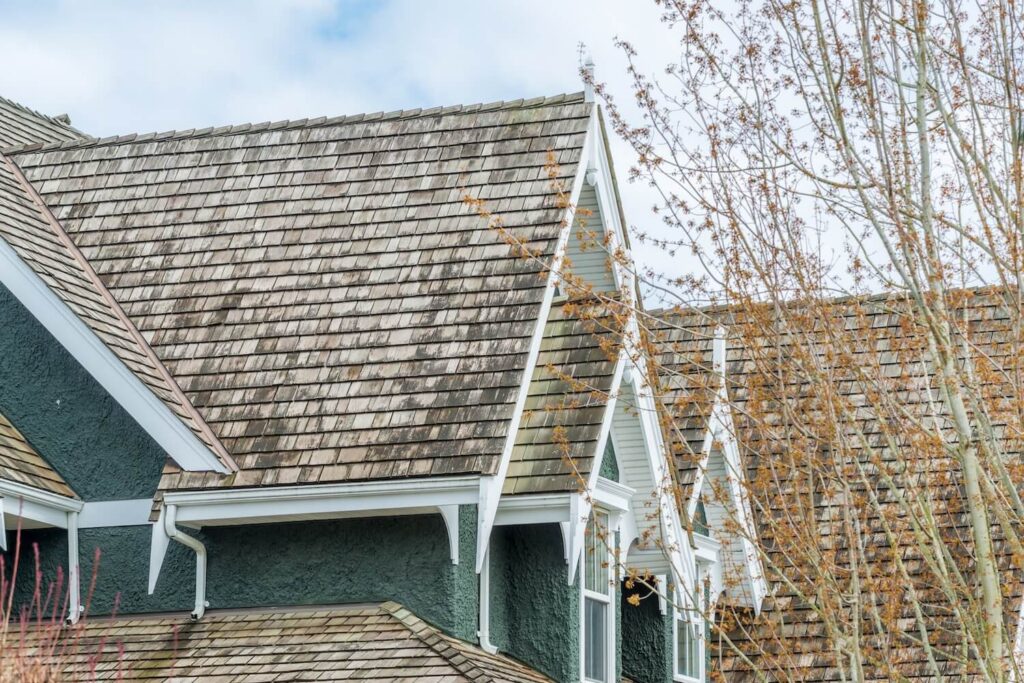
In a climate defined by prolonged dampness, steady drizzle, and dense seasonal fog, water rarely attacks a home with catastrophic suddenness. Instead, it operates with quiet persistence. A microscopic crack around a pipe boot, a slightly lifted shingle tab, or an aging valley flashing allows tiny amounts of water to trickle beneath the outer surface with every rainfall. For months, or even years, this water pools across wooden roof decks, saturates attic insulation, and fosters mold growth without ever creating a visible stain on your living room ceiling.
By the time a brownish ring finally blooms across your drywall, the damage underneath your shingles has already escalated into a major structural and health crisis. Understanding how moisture sneaks into Springfield roofs, what happens beneath the surface, and how to detect hidden water before it ruins your home is essential for every Willamette Valley property owner.
The Anatomy of a Hidden Leak: How Water Bypasses Your Shingles
To understand why a roof can “look fine” while actively rotting underneath, one must look at how modern residential roofing systems are engineered and how Oregon’s wet climate exposes their vulnerabilities.
A standard asphalt shingle roof is an overlapping, gravity-dependent shedding system. Shingles are designed to slide water downward from ridge to eave. However, Springfield experiences nearly 50 inches of rain annually, often delivered as continuous, multi-day drizzles accompanied by high relative humidity and calm winds. Under these conditions, water does not always flow rapidly off the roof. Ambient moisture lingers, and capillary action draws standing water laterally beneath compromised shingle edges.
Water intrusion typically begins at the weakest links in the roofing envelope:
- Roof Penetrations and Flashing Joints: Metal flashing around chimneys, skylights, dormers, and plumbing vent boots expands and contracts as outdoor temperatures shift. Over time, caulking lines split, rubber boots harden and crack, and flashing seams loosen. Rainwater trickles along the pipe or chimney structure, bypassing the outer shingles entirely.
- Lifted or Warped Shingles: High wind gusts or backing-out deck fasteners can raise the lower edge of a shingle by just a fraction of an inch. That tiny gap becomes an open door for wind-driven rain.
- Debris Dams in Valleys: Springfield’s abundant bigleaf maples, Douglas firs, and Oregon oaks drop leaves and needles directly into roof valleys. When organic debris accumulates in these drainage channels, it forms a natural sponge that traps water, forcing it backward underneath adjacent shingles.
Once liquid water passes beneath the shingle layer, it hits the underlying wood deck. Because attics are unheated, dimly lit, and possess limited natural airflow, trapped moisture cannot evaporate easily. The water begins a slow, downward journey, soaking into materials long before it ever drips onto a ceiling joist.
The Silent Escalation: From Wood Rot to Indoor Air Hazards
When moisture remains trapped beneath your shingles, it initiates a three-stage deterioration process that compromises your property’s structural integrity and your family’s health.
Stage 1: Structural Decking Rot and Fastener Corrosion
The first casualty of hidden moisture is the wooden sheathing (plywood or OSB) that forms your roof deck. As wood absorbs water, it loses its structural rigidity. The sheathing swells, delaminates, and develops soft, spongy sections that yield under foot pressure. Simultaneously, steel deck fasteners begin to rust. As nails corrode, they lose their mechanical grip, allowing shingles to lift further and accelerating water entry.
Stage 2: Attic Insulation Saturation
Once the roof decking becomes fully saturated, gravity pulls excess water down into your attic space. Here, water encounters your home’s thermal barrier, fiberglass batts, or blown-in cellulose insulation.
Insulation acts like a dense sponge, soaking up gallons of water and holding it directly against structural ceiling framing. Wet insulation compresses and clumps together, completely losing its insulating thermal resistance (R-value). As a result, your home leaks heat rapidly during chilly Willamette Valley winters, forcing your furnace to run continuously and driving up utility costs.
Stage 3: Mold Colonization and Respiratory Health Hazards
The most concerning consequence of unaddressed roof moisture is its direct impact on indoor air quality and human health. Mold spores exist naturally in ambient air everywhere, but they require three elements to colonize: organic food (wood decking and drywall paper), warm temperatures, and moisture.
When a roof leak keeps attic wood and insulation damp for more than 24 to 48 hours, mold spores germinate and flourish. Because attic air communicates with your living space through ceiling light fixtures, exhaust fans, and HVAC ductwork, fungal spores eventually circulate throughout your home.
Major medical reviews, including landmark reports by the Institute of Medicine (IOM) and the World Health Organization (WHO), have established clear links between indoor dampness, hidden roof leaks, and upper respiratory illness. Exposure to damp indoor environments increases the risk of developing:
- Persistent wheezing, dry coughing, and throat irritation.
- Chronic sinus congestion and nasal inflammation.
- Severe asthma attacks in individuals with pre-existing conditions.
- Heightened allergic sensitivity in children and older adults.
Many homeowners spend months treating recurring respiratory symptoms with over-the-counter allergy medications, entirely unaware that the true trigger is sitting directly above their heads in the form of a damp, moldy roof deck.
Warning Signs: How to Spot Hidden Moisture Early
Because waiting for a ceiling drip is a recipe for expensive roof repairs, Springfield homeowners should learn to look for subtle warning signs that indicate water is trapped beneath their shingles.
1. Checking the Attic Decking
If you have safe access to your attic, conduct a periodic inspection using a high-powered flashlight after a heavy rainstorm. Look at the underside of the wooden roof sheathing. Dark water stains, white powdery efflorescence, rusting nail tips, or black mold speckles along rafters are definite proof that water is penetrating the shingle layer.
2. Excessive Granule Accumulation in Gutters
As asphalt shingles age and absorb trapped moisture, the bonding adhesives holding their protective mineral granules begin to break down. During heavy downpours, these granules wash down the roof slope and collect in your gutters. If your gutter troughs are filled with a thick layer of dark, sand-like sediment, your shingles are losing their protective shield, making underlayment saturation imminent.
3. Warped, Cupping, or Spongy Shingles
Look up at your roofline from the ground during early morning hours when light strikes the roof at an angle. Shingles that appear raised, cupped at the edges, or buckled indicate that the wood decking beneath them has swollen from absorbed moisture. If walking on the roof reveals soft, yielding spots underfoot, structural deck rot is already underway.
4. Musty Odors in Upper Rooms or Closets
If upper-level bedrooms, hallway closets, or attic spaces retain a persistent, earthy, or musty smell that does not vanish after cleaning, moisture is likely trapped inside the wall or ceiling cavities above.
Advanced Leak Detection: The Power of Thermal Infrared Cameras
Traditional roof inspections rely on visual observation. While an experienced inspector can spot cracked flashings or worn shingles from a ladder, visual checks cannot see liquid water trapped beneath thick asphalt shingles or hidden inside attic insulation layers.
To solve this diagnostic challenge, elite roofing specialists utilize non-destructive infrared thermal imaging technology.
Thermal infrared cameras measure surface temperature signatures across roof planes and interior ceilings. Because wet insulation and saturated wood sheathing hold heat differently than dry building materials, an infrared camera reveals trapped moisture pockets as distinct thermal anomalies.
By pairing thermal imaging with electronic moisture probes, technicians can map the exact boundary of a hidden leak without tearing up undamaged shingles. This precision allows for targeted, cost-effective repairs rather than unnecessary guesswork.
Fix the Leak Before You Clean the Surface
When homeowners discover hidden moisture or attic mold, their initial reaction is often to hire an indoor mold remediation team to scrub the affected drywall or spray chemical treatments across the attic rafters.
While cleaning interior surfaces is an important step in restoring indoor air quality, remediating mold without fixing the underlying roof leak is a complete waste of money. As soon as the next Willamette Valley rainstorm arrives, fresh water will soak the newly cleaned wood, and mold colonies will re-establish themselves within days.
The correct restoration sequence must always follow three strict steps:
- Repair or Replace the Roofing Envelope: Eliminate the entry point by replacing damaged flashings, worn pipe boots, or degraded shingle courses. If the roof has reached the end of its 20-to-25-year service life, invest in a full system replacement to ensure long-term watertight protection.
- Remove Saturated Building Materials: Tear out and discard water-logged attic insulation, rotted wood decking, and ruined ceiling drywall that cannot be dried completely within 24 to 48 hours.
- Sanitize and Dry the Interior Space: Deploy commercial dehumidifiers and air movers to reduce structural timber moisture levels below 15% before installing fresh insulation and drywall.
Partnering with Springfield’s Local Roofing Experts
Protecting your home against the subtle, persistent moisture risks of the Willamette Valley requires a professional contractor who understands local building science, diagnostic technology, and complete weather-barrier installation.
Operating as a trusted, veteran-owned local contractor with central offices in Eugene and Bend, Deschutes Roofing delivers comprehensive residential and commercial roofing solutions across Springfield and the surrounding communities.
When you schedule a leak evaluation with Deschutes Roofing, their factory-certified technicians do not simply glance at your shingles from the driveway. They conduct a thorough inside-and-out inspection of your entire roofing envelope, using advanced infrared thermal imaging cameras to locate hidden water pathways and evaluate attic insulation, decking health, and ventilation airflow.
As a certified contractor for leading manufacturers, holding IKO Craftsmen Premiere, Owens Corning Preferred, and Malarkey Emerald Premium credentials, Deschutes Roofing installs high-performance roofing systems built to withstand heavy Oregon downpours. They back every full installation with an industry-leading 25- to 30-year workmanship warranty alongside 50-year non-prorated product coverage.
To minimize disruption to your home life, Deschutes Roofing can complete most residential reroofing projects in just a single day. They protect your flower beds, landscaping, and driveways through their exclusive “New Roof, No Mess®” guarantee, utilizing specialized mobile debris management systems to catch old shingles at the roofline.
Frequently Asked Questions (FAQ)
Can a roof leak without creating a visible stain on my ceiling?
Yes. Water often trickles beneath shingles, travels horizontally along rafters, and soaks into thick attic insulation long before it saturates the ceiling drywall. A roof can suffer extensive structural deck rot and mold growth for months before an interior stain appears.
How quickly does mold begin to grow after a roof leak occurs?
In damp, unventilated spaces like attics, mold spores can germinate and begin colonizing organic materials, such as wooden sheathing, rafters, and paper-faced insulation, within 24 to 48 hours of water exposure.
What is the difference between a free visual estimate and a written roof inspection report?
A free estimate includes a visual inspection and a verbal report detailing necessary repairs or replacement costs. A formal written roof inspection report is a detailed diagnostic document complete with technical observations and supporting photographs, typically used for real estate transactions, insurance claims, or legal validation.
How does an infrared camera help find hidden roof leaks?
Infrared cameras detect subtle surface temperature signatures across roof planes and interior ceilings. Because wet insulation and saturated wood retain heat differently than dry building materials, the camera displays trapped water pockets as distinct visual anomalies, mapping the leak’s exact source without destroying undamaged shingles.
Why shouldn’t I just clean the mold in my attic before fixing the roof?
Cleaning mold without fixing the underlying water intrusion leaves the source open. The next rainstorm will reintroduce water into the wood, causing mold colonies to return within days. Always fix the roof leak first, then remove wet insulation and remediate interior surfaces.
How often should Springfield homeowners have their roofs professionally inspected?
In the Willamette Valley’s wet climate, it is recommended to schedule a professional roof evaluation at least once every two to three years, as well as immediately following severe windstorms, hail events, or heavy rain periods.
Conclusion: Protect Your Home’s Hidden Envelope
Your home is your most valuable financial asset, and its roof serves as the ultimate shield protecting your family, interior furnishings, and structural framing from the elements. But assuming your roof is healthy simply because “it looks fine from the street” is a dangerous gamble that invites hidden wood rot, ruined insulation, toxic mold, and respiratory health risks into your sanctuary.
By understanding how moisture sneaks beneath shingles, watching for early warning signs, and leveraging advanced diagnostic technology, you take proactive control of your home’s health.
When you are ready to evaluate your roof’s true condition, trust the factory-certified, local experts at Deschutes Roofing to deliver clear diagnostic proof, uncompromising craftsmanship, and long-term peace of mind. Contact Deschutes Roofing today to schedule your comprehensive on-site evaluation, explore flexible financing choices, and keep your Springfield home safe, dry, and healthy for decades to come.