 Skip to content

There is a distinct moment of dread that every homeowner experiences at least once. It usually happens during a heavy autumn rainstorm or right after a harsh winter freeze. You are walking down the hallway, glance up at the ceiling, and notice a faint, brownish water stain that was not there yesterday. Or perhaps you are out in the yard cleaning up debris after a severe windstorm, look up at your roofline, and spot a cluster of dark, bare spots where shingles used to be.
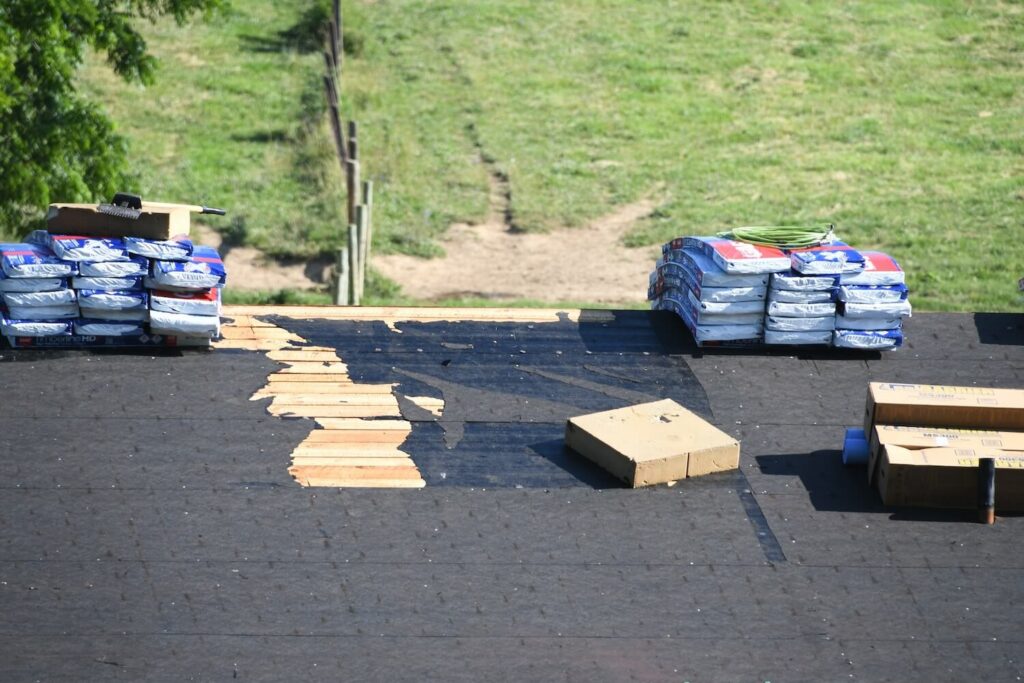
In that quiet moment, a flurry of financial and practical questions immediately begins to race through your mind. How much is this going to cost? Is this just a minor leak that can be fixed with a quick, inexpensive patch, or am I looking at a major structural failure? Am I better off paying a few hundred dollars for a temporary repair, or am I simply throwing good money after bad when a full roof replacement is inevitable?
Navigating the line between a sensible, cost-effective roof repair and an unnecessary financial band-aid is one of the most critical decisions a property owner will ever make. A roof is not merely a cosmetic capping on your house; it is a complex, engineered system designed to protect your foundation, framing, insulation, and family from the elements. Making the wrong choice can lead to recurring water damage, ruined interior drywall, hidden mold growth, and wasted capital.
Understanding how professional roofers evaluate structural integrity, material lifespan, and cost-benefit ratios gives you the clarity needed to make a confident, financially sound decision for your home.
The Mathematics of Roof Aging and Repair: The 50% Rule and Lifespan Realities
When evaluating whether a repair makes financial sense, professional contractors do not rely on guesswork or gut feelings. Instead, they apply a combination of material science, structural analysis, and financial benchmarks. The most fundamental framework used in the industry is known as the 50% Rule.
The 50% Rule states that if the cost of repairing a damaged roof approaches 30% to 50% of the total cost of a full roof replacement, or if the roof has already passed 75% of its expected design lifespan, a professional roof repair is rarely a wise investment.
To understand why this repair rule is so reliable, you must examine the natural degradation curve of different roofing materials:
- Standard Architectural Asphalt Shingles: Designed to last between 20 and 25 years under normal weather conditions. Once an asphalt shingle roof reaches 15 to 18 years of age, the petroleum oils that keep the shingles pliable and water-resistant have largely evaporated due to solar ultraviolet (UV) exposure. At this stage, the material becomes brittle and dry. Repairing one section often damages the surrounding brittle shingles during installation, leading to a domino effect of new leaks.
- Standing Seam Metal Panels: Built to last between 40 and 70 years. Because metal panels do not dry out or rot, localized repairs, such as replacing a damaged flashing boot, tightening a seam, or replacing a storm-impacted panel, are almost always cost-effective, even decades after installation.
- Concrete and Clay Roofing Tiles: Carrying a lifespan of 50 years or more, tile systems rarely suffer widespread material failure. However, the underlayment membrane beneath the tiles usually degrades after 25 to 30 years. If the tiles themselves are intact, repairing isolated cracked tiles is a straightforward, highly economical decision.
If your roof is relatively young and in good overall health, spending $500 to $1,200 on a targeted repair protects your initial investment and extends the roof’s working life. However, if your roof is nearing the end of its design lifespan, sinking money into repeated repairs is like putting expensive new tires on a car with a blown engine. Within two or three years, the cumulative cost of multiple emergency service calls will quickly equal the down payment on a brand-new, fully warrantied system.
Repairs and Red Flags: When a Repair Is Throwing Money Away
Conversely, there are specific structural and physical warning signs that indicate a roof has passed the point of no return. Attempting to patch a roof exhibiting these symptoms is a temporary band-aid that masks a deepening structural problem:
1. Widespread Granule Loss and Material Brittleness
The tiny mineral granules coated onto the surface of asphalt shingles serve a vital purpose: they shield the underlying asphalt substrate from destructive solar radiation. As shingles age, they shed these granules. If you clear out your gutters and find several inches of sand-like sediment, or if you look up and see widespread dark “bald spots” across multiple roof slopes, the shingles have lost their protective shield. Patching one leak on a bald, brittle roof will do nothing to stop the adjacent degraded shingles from leaking next month.
2. Physical Warping: Cupping, Curling, and Blistering
When shingles begin to warp, curling upward at the edges (cupping) or buckling outward in the middle (clawing), it indicates that the asphalt core has completely dried out or that the attic beneath suffers from severe, unvented heat buildup. Warped shingles can no longer lie flat against the roof deck, leaving the underlying wood completely exposed to wind-driven rain. Once shingle warping becomes widespread across multiple slopes, localized patching is physically impossible.
3. Structural Deck Rot and Spongy Decking
If you walk across a roof deck (or observe an inspector doing so) and notice soft, spongy sections that yield under foot pressure, the problem has extended far beyond the outer shingles. Persistent, unaddressed leaks saturate the underlying wooden plywood or OSB sheathing, causing the wood to rot, delaminate, and lose its structural integrity. Nails can no longer hold securely in rotted wood. When structural decking is compromised across multiple areas, the entire roof system must be torn off, the wood replaced, and a fresh envelope installed.
4. The “Patchwork Quilt” Effect
If an inspection reveals that a roof has already undergone multiple previous repairs, featuring mismatched shingle colors, globs of roof cement smeared over old seams, and layered flashing fixes, adding yet another patch is a recipe for failure. Multiple repair layers create uneven planes that trap water and debris, creating new leak pathways and severely diminishing your home’s curb appeal and market resale value.
The Value of Professional Repair Diagnostics and Written Transparency
When facing a potential roof repair or replacement, the single most dangerous mistake a homeowner can make is relying on a casual, ground-level guess. Many minor defects, such as a hairline crack in a valley flashing or early-stage decking saturation, are completely invisible from the driveway. Conversely, an impressive-looking streak of dark black algae on a roof slope might look like catastrophic decay to an untrained homeowner, when it is actually a harmless cosmetic issue that can be easily treated.
This is why obtaining a thorough, professional diagnostic evaluation is so essential. A certified roofing contractor brings safety equipment, technical expertise, and advanced diagnostic tools to inspect the entire roofing envelope, from the ridge cap and valley seams to the attic insulation and soffit intake vents.
When you invite a reputable contractor to evaluate your property, you should expect total transparency. A professional team will clearly explain whether a targeted repair will genuinely extend your roof’s working life or whether a replacement is the only safe, long-term solution. For straightforward issues, a transparent company will provide an itemized repair estimate. For complex situations, such as real estate transactions or major insurance claims, they can provide detailed written inspection reports complete with high-resolution photographic evidence to support your decision-making process.
This commitment to objective diagnostic clarity is a cornerstone of how Deschutes Roofing serves property owners. Rather than pushing unnecessary full replacements on young roofs or offering temporary band-aids on failing structures, their factory-certified inspectors conduct top-to-bottom evaluations to provide clear, honest recommendations tailored to your home’s exact condition and your household budget.
Financial Strategy: Comparing Patch Repair Costs Against Full System Value
To make a final, confident choice, it helps to compare the long-term financial math of both options side by side.
Imagine your roof is 17 years old and has developed a leak over the garage. A professional roof repair contractor offers to patch the area for $900. Six months later, another leak develops around the chimney, costing $1,100 to repair. The following winter, wind lifts shingles on the back slope, requiring another $800 service call. Over an 18-month period, you have spent $2,800 in cash out of your emergency savings. Yet, your roof is still 18 years old, possesses no warranty protection, remains prone to new leaks, and lowers your home’s appraisal value.
Now consider the alternative. Instead of spending $2,800 on fragmented patches, you apply those funds toward a complete, engineered roof replacement. Through modern home improvement financing programs, a full replacement can often be secured with zero down payment and predictable, low monthly installments that fit comfortably into your regular budget.
By choosing a full replacement, every dollar invested delivers immediate, compounding returns:
- Total Peace of Mind: Complete protection backed by non-prorated manufacturer material warranties lasting up to 50 years, alongside robust workmanship guarantees.
- Energy Efficiency Savings: Modern synthetic underlayments, reflective shingle technology, and balanced attic ventilation reduce thermal heat transfer, lowering your monthly heating and cooling bills.
- Home Value Preservation: A brand-new, certified roof instantly boosts your home’s curb appeal, elevates appraisal value, and eliminates major inspection friction if you decide to sell your property.
To ensure that high-quality protection remains accessible, Deschutes Roofing offers accessible 100% financing options through GreenSky, featuring fast online approvals, competitive terms, and zero prepayment penalties. This financial flexibility allows homeowners to upgrade to a complete, warrantied roofing shield without draining their liquid savings on endless patch jobs.
Furthermore, when a replacement is required, working with a factory-certified leader like Deschutes Roofing guarantees that the project is executed with maximum speed and care. Their experienced crews complete most residential roof installations in just a single day, protecting your property with their exclusive “New Roof, No Mess®” guarantee, utilizing mobile debris management systems to keep your landscaping completely spotless.
Frequently Asked Questions (FAQ)
How do I know if my roof leak requires a simple repair or a full replacement?
A repair is usually sufficient if your roof is relatively young (under 12 years old), the damage is localized to a small area (like a blown-off shingle or cracked pipe boot), and the underlying wood deck is dry and sound. A full replacement is necessary if the roof is near the end of its expected lifespan (15–20+ years for asphalt), shows widespread shingle cupping or granule loss, or has structural wood rot across multiple slopes.
What is the “50% Rule” in roof maintenance?
The 50% Rule is a professional guideline stating that if the cost of repairing a roof reaches 30% to 50% of the cost of a total roof replacement, or if the roof has exceeded 75% of its design lifespan, investing in a repair is financially inefficient compared to a full replacement.
Can I just repair the leaks on one side or slope of my roof?
While partial roof replacements or single-slope repairs are technically possible, they are rarely recommended. Roofing materials age uniformly under solar exposure. If one slope has degraded to the point of leaking, the remaining slopes are usually right behind it. Furthermore, partial replacements create visible color mismatches and seam vulnerabilities where the new and old materials meet.
Is it safe to pressure wash my roof to clean off moss before repairing it?
No. High-pressure power washing is highly destructive to asphalt shingles. The intense water stream strips away the protective mineral granules, exposes the raw asphalt substrate, and voids manufacturer warranties. Moss should always be treated using low-pressure “soft washing” techniques and specialized, safe cleaning solutions.
How much does a typical roof repair cost compared to a replacement?
Minor localized repairs, such as replacing a pipe boot, sealing a flashing joint, or replacing a few shingles, typically range from $300 to $1,200 depending on pitch and accessibility. Full roof replacements vary widely based on square footage and material selection, but offer long-term financial return through 50-year warranties, energy savings, and elevated home resale value.
Does homeowners’ insurance cover roof repairs or replacements?
Insurance policies typically cover repairs or replacements if the damage was caused by a sudden, accidental covered event, such as a severe hail storm, high wind gusts, or a fallen tree limb. Insurance does not cover damage resulting from normal age-related wear and tear, neglected maintenance, or gradual material decay.
Repairs Conclusion: Making a Confident Choice for Your Home
When a leak appears or storm damage strikes, deciding whether to repair or replace your roof does not have to be an overwhelming, stressful guess. By applying clear physical guidelines, evaluating the age of your materials, checking for widespread granule loss or warping, inspecting the wooden deck, and weighing repair quotes against long-term replacement value, you can make a practical, financially smart decision.
A targeted repair on a young, healthy roof is a great way to protect your investment. But when an aging roof begins to fail systemically, choosing a complete, engineered replacement stops the endless cycle of emergency service calls and delivers decades of dry, worry-free protection.
When you are ready to evaluate your options, trust the factory-certified experts at Deschutes Roofing to provide honest advice, transparent diagnostics, and superior craftsmanship. Contact Deschutes Roofing today to schedule your comprehensive on-site roof evaluation, explore your financing choices, and keep your home safe, beautiful, and secure for years to come.